Your customers move between Google organic and AI search when they're researching a purchase.
A buyer looking for enterprise software might discover a vendor through ChatGPT, search for industry reviews on Google, and return to ChatGPT to compare alternatives.
Semrush Journeys data illustrates how connected these experiences have become. Our analysis found that 90% of customer journeys containing an AI touchpoint also included an organic search touchpoint.
This example for Home Depot has five visits to either Google or ChatGPT (shown in green).

This creates a measurement problem.
Exploring search separately via keywords and prompts risks fragmentation. It also makes it difficult to understand how customers discover and evaluate brands across their wider journeys.
But topics present a shared and common way to understand both forms of search.
They’re foundational to what should be a new standard for evaluating AI visibility data: demand-led, topic-structured, and response-validated.
Because they provide a way to connect search and AI visibility around customer needs, and what they’re actually trying to understand or accomplish.
They also make competitive positioning more measurable, forming a pragmatic basis for setting targets and prioritization. They clearly establish where your brand stands, who leads, and how much ground you need to make up.
What's different about thinking in topics
Topics aren't a new concept in marketing. Teams have used topic clusters, pillar pages, and related content structures for years. The objective has generally been to organize information around a subject and establish sufficient depth to meet different search intent.
That remains valuable but we're now extending topics to do something more significant. Rather than simply organizing what a business publishes, topics can help define what its brand should be known for.
Think about a CRM software company: Its core positioning might emphasize automations, integrations, and flexible pricing.
Those associations matter because they're the reasons customers might consider that business over its competitors. They're increasingly vital to how AI search weighs different options and recommends brands.
When a potential customer searches for CRM platforms that offer a broad integration capabilities, the system needs to determine which vendors are relevant to that need. And brands with a consistent presence across that topic are more likely to appear in the response.
Our recent research with Kevin Indig analyzed 1,094 topics in ChatGPT and provided evidence of the opportunity at hand. Of these, just 15.2% of the topics had a clear owner.
Buck taking advantage of this requires brand positioning to be treated as a much wider responsibility across the business. A typical enterprise may see:
- Product marketing steer what a business stands for
- Content teams develop the information supporting that positioning
- Search teams ensure that owned content is discoverable
- PR, customer advocacy, and social teams influence how the wider market discusses the brand
For a business to become consistently associated with a topic, those efforts need to reinforce one another, which is where topical gravity becomes a crucial concept for cross-functional understanding.
How topics help present a clearer picture of visibility
A typical customer will seek answers for multiple needs over the course of their journey, meaning potentially dozens of relevant keywords and prompts.
Organizing those that are similar into topics allows us to better understand each underlying customer need, maintain connection between SEO and AI search, and identify where meaningful gaps in content are.
This is particularly important in AI search as they draw on related information beyond the original prompts through query fan-out. Here multiple related searches run in the background to retrieve wider information for constructing an answer.

This retrieval can then involve several connected areas of a topic, reinforcing the importance of building meaningful coverage rather than concentrating on individual keywords or prompts.
It also means looking beyond your owned content and considering third-party websites.
Independent reviews, community discussions, specialist publications, and other sources. The sources that matter most can vary considerably between industries and markets.
A strong topical strategy needs to account for the information a business controls and the wider sources influencing how it is represented.
Rather than managing search and AI visibility as separate activities, Topics provide a shared structure for investigating both.
How topics enable benchmarking against competitors
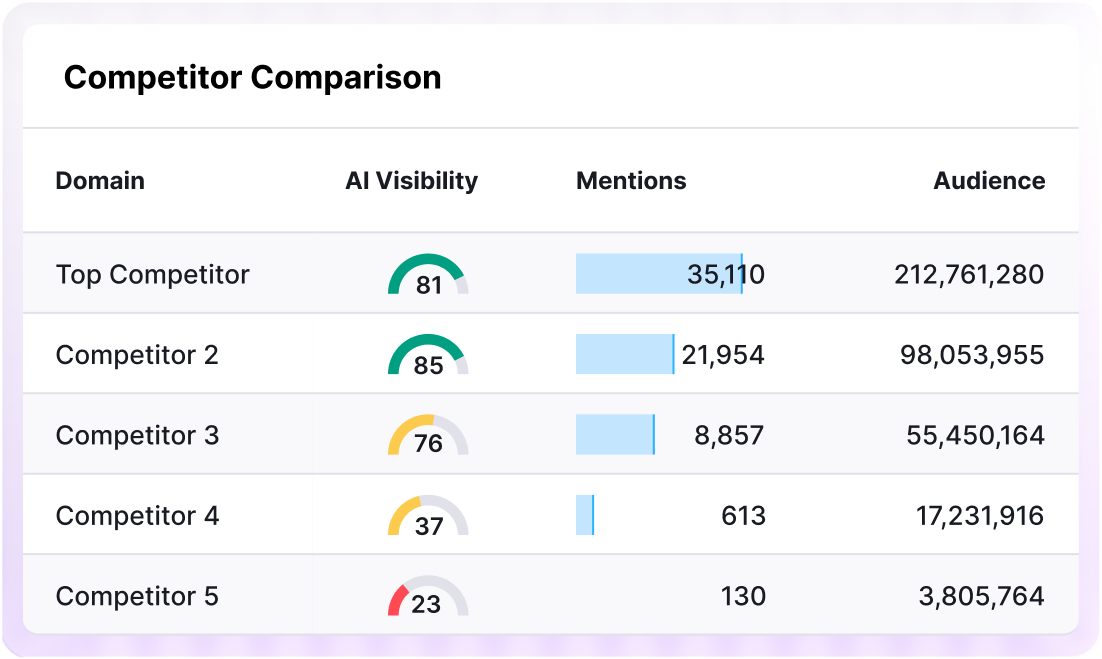
A brand might appear regularly in AI responses around enterprise CRM integrations. But without understanding which other vendors are appearing, it's difficult to establish whether that represents a strong competitive position. The same applies to organic search.
Visibility becomes much more informative when measured against the businesses competing for the same customer demand. This is where topical gravity provides a vital benchmark and the ability to set clear goals.
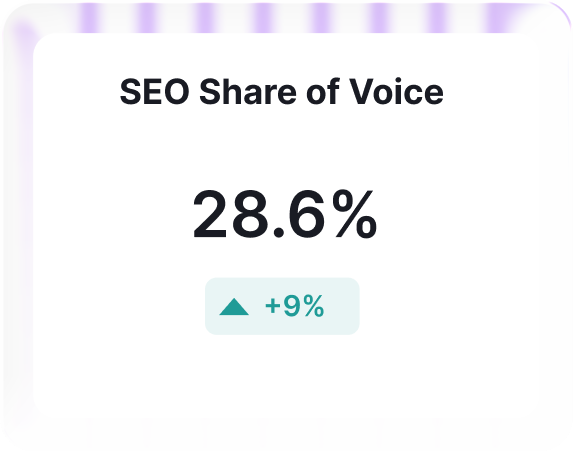
Here it acts like market share, establishing a relative position within a defined environment and showing how a brand compares with competitors.
This makes goals like improving topical share by 10% measurable and an objective that marketing leadership can evaluate and connect to wider brand and commercial priorities.
Why topics help to prioritize efforts
Once businesses understand their competitive position across key topics, they can begin making more informed decisions about where to invest.
Building topical gravity involves creating additional content, maintaining existing content, and activating third-party sources where a business may need stronger representation.
Topics then act as a starting point where customer demand, credible brand positioning, and business value intersect. For example:
A company might identify a topic with search interest where its product offering is highly relevant, but where competitors currently outmuscle it.

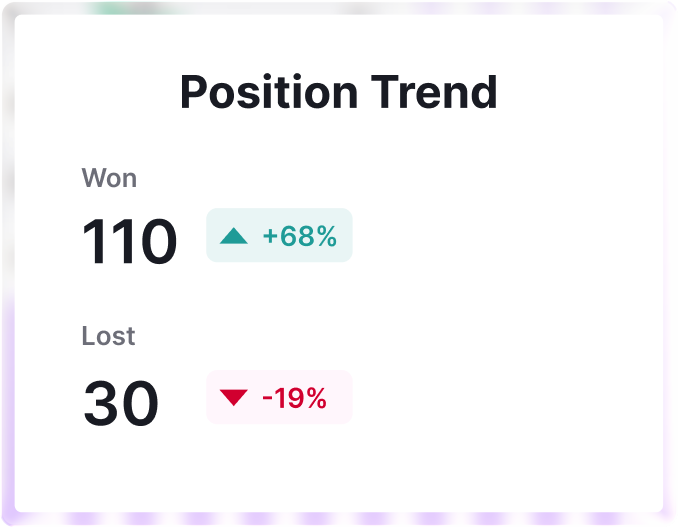
They have a clear next step in understanding the nature of the visibility gap.
Does the business have sufficient content covering the customer's questions? Are its product pages current and comprehensive? Which third-party publications are being cited, and how does the brand appear within them?
The answers to these questions immediately determine where to move next: refining existing content, building additional coverage, or strengthening the brand's presence in influential external sources.
Depth needs to be the first focus before expanding into new topics
Rather than pursuing every adjacent opportunity, businesses should first establish meaningful coverage of the topics central to their positioning.
In a follow-up study examining how topical authority spreads in ChatGPT, we found that depth within a category was more closely associated with brand mentions than scattered visibility across numerous unrelated categories.
Brands that appeared consistently across a topic were better positioned to extend that visibility into closely related areas. But that association weakened as the distance between topics increased.
That means researching the most important questions customers ask throughout their buying journeys and investing resources to establish strong positioning. Then you can credibly investigate genuinely adjacent opportunities to build momentum.
The goal is to build a credible association between the brand and the subjects where it can offer value, then expand from that position.
This is achieved through consistent, relevant visibility across a topic, then strengthening the association between a brand and that subject, supporting recognition across related questions and research touchpoints.
How Semrush helps brands turn topics into growth
Semrush helps businesses identify the topics that matter most to their customers, understand their competitive position within each one, and prioritize the opportunities that can have the greatest impact.
This is powered by our unique AI visibility data, which brings together real-world customer demand, extensive search intelligence, and observed AI responses through a demand-led, topic-structured, and response-validated approach.
By connecting these signals, brands can see where they lead, where competitors are stronger, and which Topics offer the greatest potential for growth.
The result is a clearer path from understanding market demand to building stronger visibility across search, with the intelligence to decide where to focus and what to do next.